

If you grow olives — or are thinking about buying olives to press for oil — one of the first questions you will ask is simple: how much oil will I actually get? You have 100 kg of olives. Will that yield 10 liters of oil? 15? 20? The answer matters because it determines whether your olive oil venture is profitable, what price you need to charge per liter, and whether your pressing method and equipment are giving you the best possible return on your fruit.
The short answer: from 100 kg of olives, you can expect to produce 10–22 liters of olive oil, depending on olive variety, ripeness, oil content, extraction method, and equipment quality. That is a wide range — and the difference between the low end and the high end is often determined by the type of press you use. A well-operated olive oil hydraulic press machine can consistently achieve yields at the upper end of that range, extracting 18–22 liters from 100 kg of good-quality olives while preserving the cold-press quality that commands premium pricing.
Let us break down the factors that determine your actual yield, and how to maximize the oil you get from every kilogram of fruit.
Olive Oil Content Varies by Variety
Not all olives are created equal when it comes to oil content. The variety of olive you grow or buy is the single largest factor determining how much oil 100 kg of fruit will yield. Here is how common varieties compare:
| Olive Variety | Oil Content (% by weight) | Oil from 100 kg Olives |
|---|---|---|
| Arbequina | 20–24% | 20–24 liters |
| Picual | 22–26% | 22–26 liters |
| Koroneiki | 22–27% | 22–27 liters |
| Frantoio | 19–23% | 19–23 liters |
| Leccino | 17–21% | 17–21 liters |
| Mission | 15–19% | 15–19 liters |
| Manzanilla (table olive) | 12–16% | 12–16 liters |
As you can see, oil-rich varieties like Koroneiki and Picual can yield over 22 liters per 100 kg, while table olive varieties like Manzanilla may produce only 12–16 liters. If you are selecting varieties to plant — or choosing which olives to buy for pressing — this single factor can mean the difference between a profitable operation and a marginal one.
However, variety alone does not determine your actual yield. Even a high-oil variety like Koroneiki will underperform if the olives are harvested at the wrong time, stored poorly before pressing, or processed with equipment that leaves oil in the pomace.
Ripeness at Harvest Affects Yield Significantly
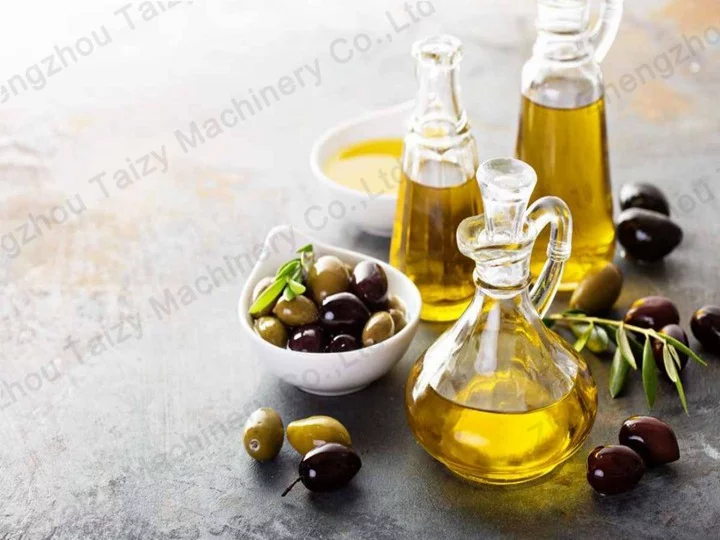
Olive oil accumulates in the fruit as it ripens. The timing of harvest has a direct and measurable impact on how much oil you can extract from 100 kg of olives:
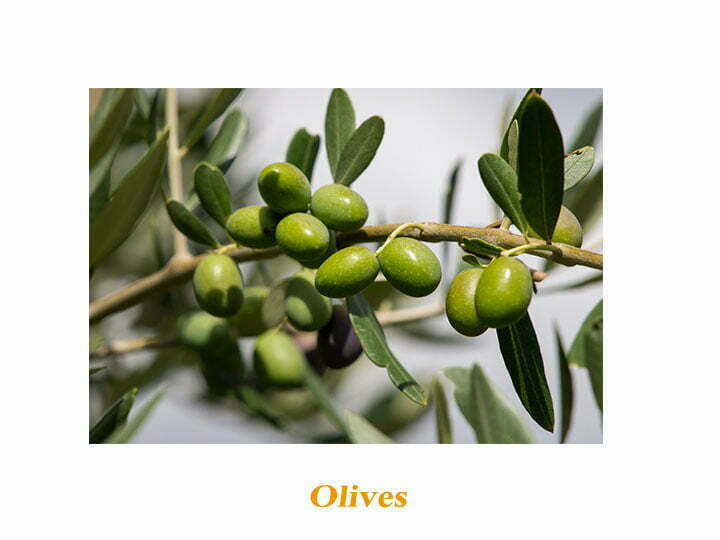
- Green olives (early harvest): Oil content is still developing. Yields are lower — typically 12–16% by weight. However, the oil produced has higher polyphenol content, stronger flavor, longer shelf life, and commands the highest premium prices.
- Veraison (mid-ripeness, turning color): This is the sweet spot for many producers. Oil content reaches 16–22%. The oil balances yield, flavor complexity, and shelf stability. Most award-winning extra virgin olive oils are pressed from veraison-stage olives.
- Ripe/black olives (late harvest): Oil content peaks at 22–27% by weight, giving the highest yield per 100 kg. However, the oil has lower polyphenol content, milder flavor, shorter shelf life, and is more prone to oxidation. These oils are often priced lower.
The decision of when to harvest is a trade-off between yield and quality. A grower who harvests at veraison may get 18 liters from 100 kg of Koroneiki olives and sell the oil for $12–18 per liter. A grower who waits for full ripeness may get 24 liters but sell for $7–10 per liter. Understanding this trade-off — and having equipment that performs consistently regardless of harvest timing — is key to maximizing total revenue, not just yield.
The Extraction Method Determines How Much Oil You Actually Recover
Here is where the story gets interesting. The oil content percentage tells you how much oil is in the olives. But how much of that oil you actually extract depends entirely on your extraction method and equipment. No method recovers 100% of the oil — some always remains trapped in the pomace (the solid residue after pressing).
| Extraction Method | Oil Recovery Rate | Oil from 100 kg (at 20% oil content) | Residual Oil in Pomace |
|---|---|---|---|
| Traditional stone press | 60–70% | 12–14 liters | 6–8% |
| Screw press (continuous) | 70–80% | 14–16 liters | 4–6% |
| Hydraulic cold press | 80–90% | 16–18 liters | 2–4% |
| Centrifugal (2-phase) | 85–92% | 17–18.4 liters | 2–3% |
| Centrifugal (3-phase) + malaxation | 90–95% | 18–19 liters | 1–2% |
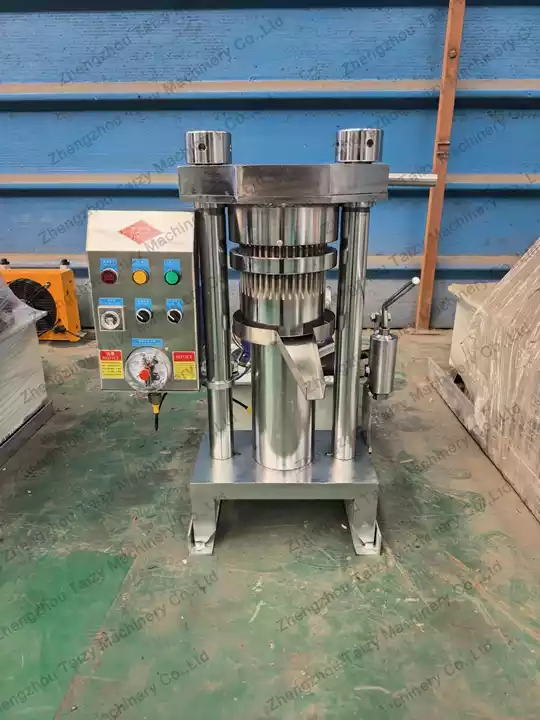
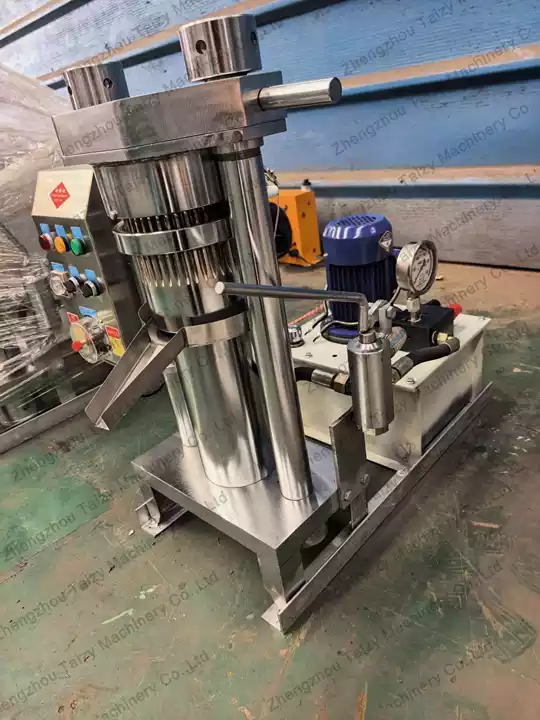
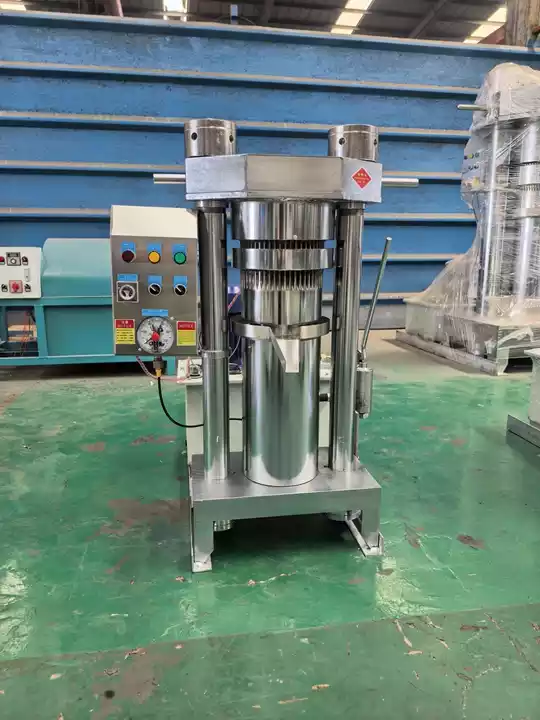
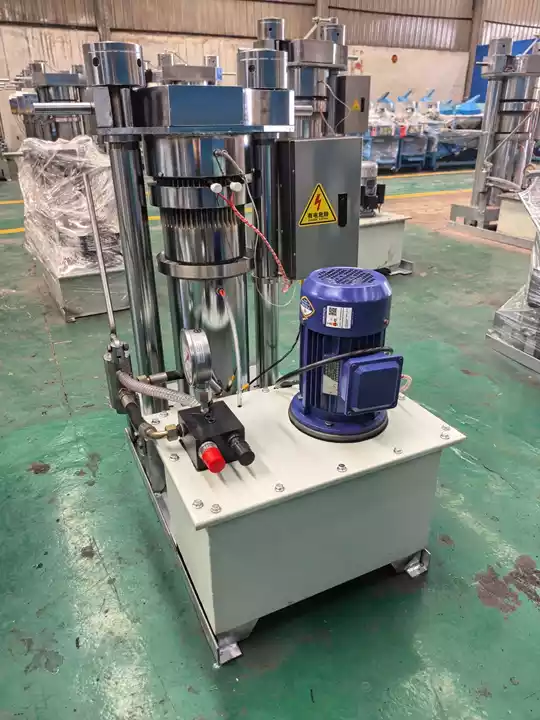
A hydraulic olive oil press machine operating at proper pressure and temperature achieves 80–90% oil recovery — meaning that from 100 kg of olives with 20% oil content, you extract 16–18 liters of oil. Compare that to a traditional stone press, which would extract only 12–14 liters from the same fruit. That is a difference of 2–6 liters per 100 kg — or roughly **$24–108 in additional revenue** per 100 kg (at $12/liter), simply from using better equipment.
Over a harvest season processing 1,000 kg of olives per day for 30 days, that difference compounds to 600–1,800 liters of additional oil — a substantial amount of money left on the table by inferior pressing methods.
Why a Hydraulic Press Maximizes Olive Oil Extraction Yield?
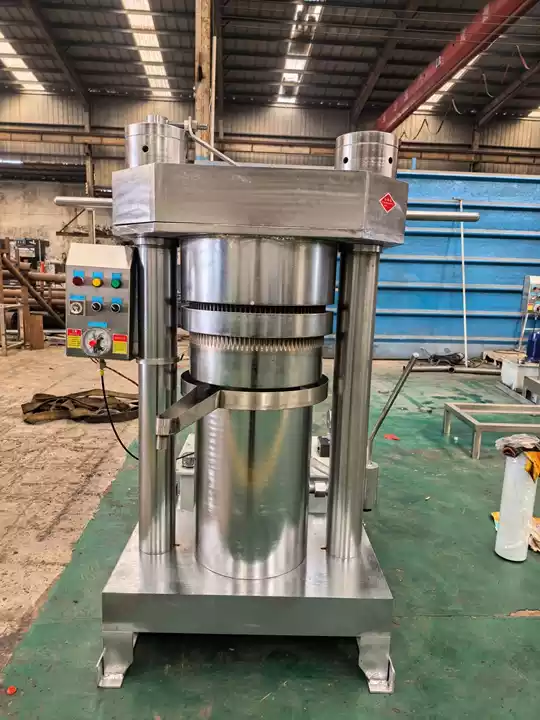
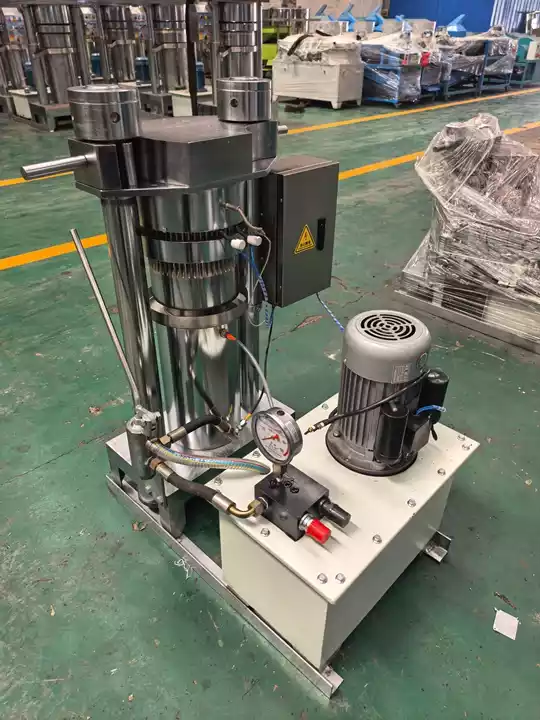
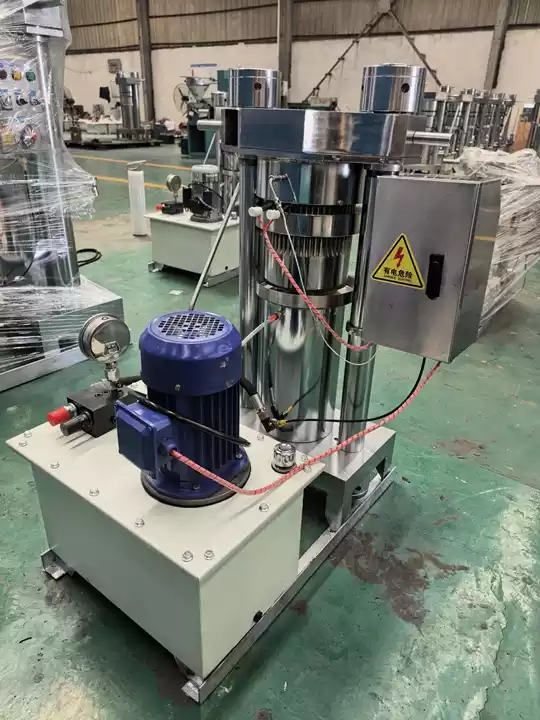
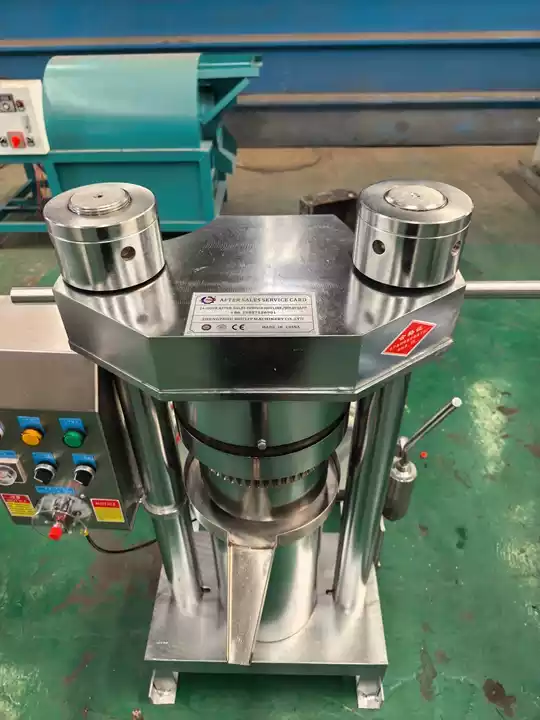
The olive oil hydraulic press machine works on a simple but powerful principle: it applies gradually increasing, constant hydraulic pressure to a bed of olive paste wrapped in filter cloths (diaphragms). As the hydraulic ram presses the paste, oil is squeezed through the filter cloth while the solids (pomace) remain trapped inside. Here is why this method achieves high extraction yields:
- High and uniform pressure: A hydraulic press can sustain pressures of 40–60 MPa (400–600 bar) across the entire paste bed. This is significantly higher than what a screw press achieves, and the pressure is applied uniformly — not concentrated at a single point. More oil is forced out of the olive paste cells.
- Low temperature (cold press): The pressing process generates minimal heat, typically keeping the paste below 27°C — the threshold for “cold-pressed” certification under international standards. This preserves heat-sensitive polyphenols, aromatics, and vitamins that give extra virgin olive oil its premium value.
- Progressive pressure ramping: Rather than applying maximum pressure instantly, the hydraulic system ramps pressure gradually. This allows oil to migrate from the interior of the paste to the surface, preventing channeling (where oil finds a path of least resistance and leaves deeper oil behind). Progressive pressing is one of the key reasons hydraulic presses outperform screw presses on yield.
- Multiple pressing cycles: Some hydraulic press operations run a second pressing cycle on the pomace, extracting additional oil. The first pressing might recover 80–85% of the oil; a second pressing can push total recovery to 88–92%.
The result: a well-operated olive oil hydraulic press machine consistently achieves higher olive oil extraction yield than any other pressing method at a comparable scale, while maintaining the cold-press quality that consumers pay a premium for.
What Affects the Yield Beyond the Press?
Several factors outside the pressing equipment itself influence how much oil you get from 100 kg of olives:
- Olive storage time before pressing: Olives begin to degrade immediately after harvest. Oil quality and extractable yield drop within 24–72 hours if fruit is not pressed. Olives stored in sacks or piles begin to ferment and oxidize, reducing both quality and yield. Pressing within 24 hours of harvest is ideal.
- Fruit condition at harvest: Olives damaged by frost, insects, or harvesting methods (beating branches with sticks, letting fruit drop to the ground) have lower oil yield and higher acidity. Gentle harvesting methods preserve quality.
- Paste particle size: The crushing step must produce a consistent, optimal particle size. Over-crushed paste emulsifies and resists pressing; under-crushed paste traps oil in intact cells.
- Malaxation time and temperature: Too short (under 30 minutes) and oil droplets have not coalesced enough; too long (over 60 minutes) and the paste begins to oxidize, reducing quality. Temperature must stay at 25–27°C for cold-press certification.
- Filter cloth quality: Worn or clogged filter cloths in the hydraulic press reduce oil flow and increase residual oil in the pomace. Cloths should be replaced or cleaned regularly.
- Operator skill: A well-trained operator who understands how to load the press, manage pressure ramp timing, and monitor oil flow will consistently achieve higher yields than an untrained one.
Ready to Maximize Your Olive Oil Extraction Yield?
Whether you are an olive grower looking to press your own fruit, a small-scale producer upgrading from a traditional press, or an entrepreneur starting an olive oil business, the yield you achieve from every 100 kg of olives depends directly on the quality of your pressing equipment.
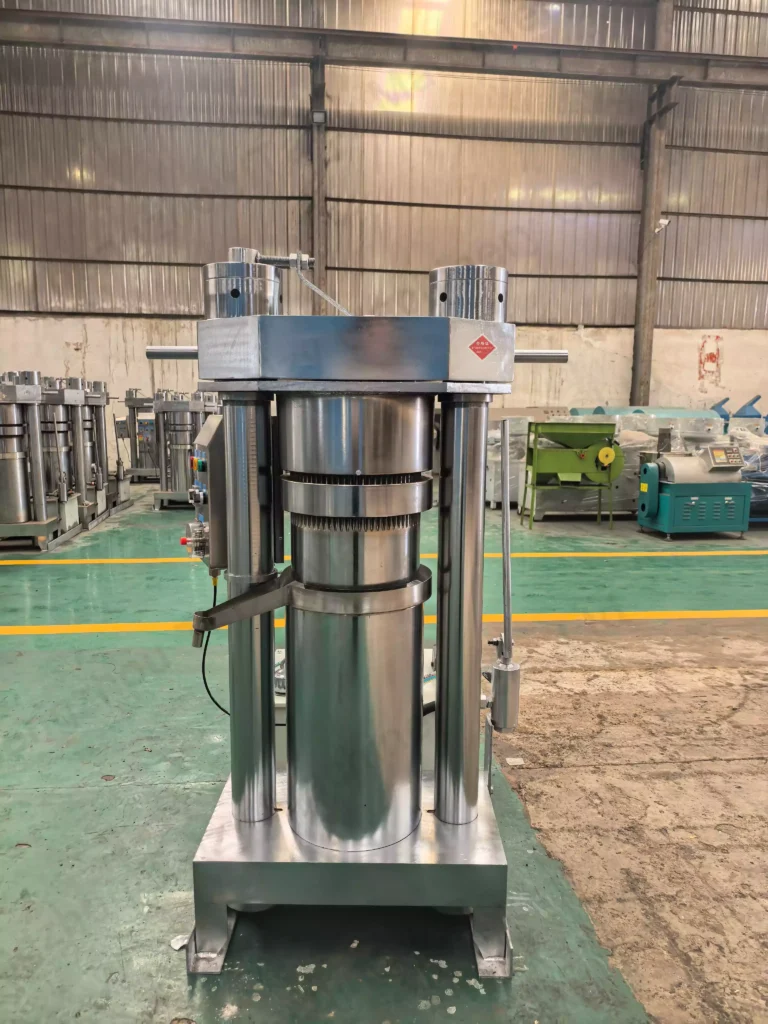
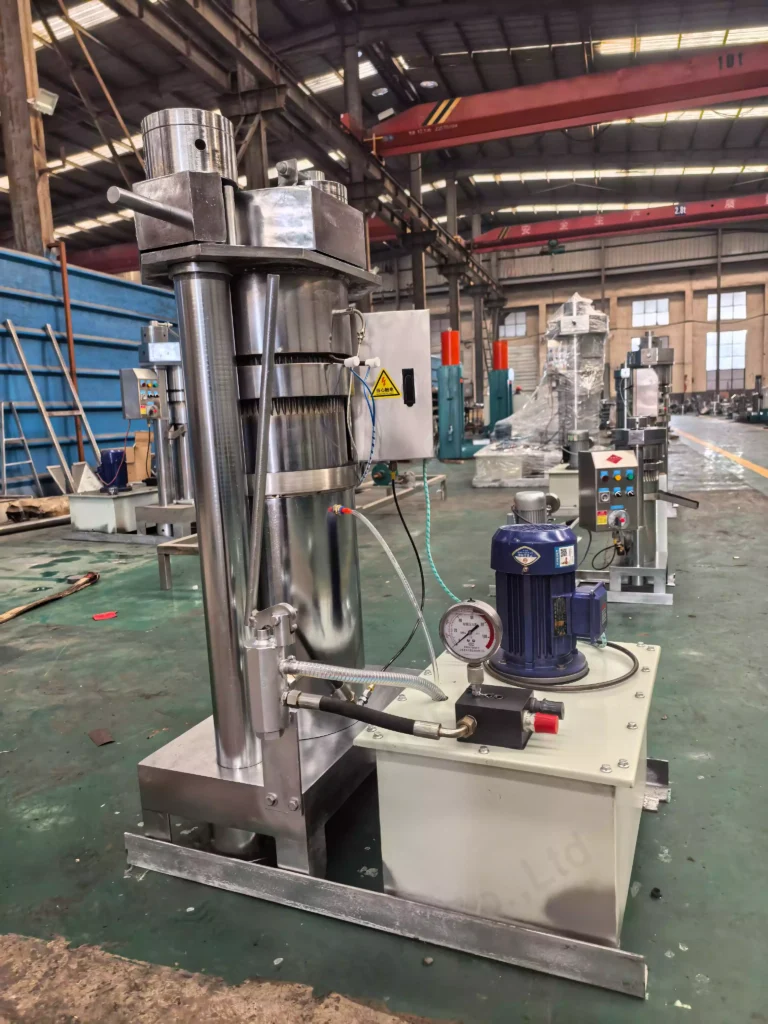
Our olive oil hydraulic press machine is engineered for maximum extraction yield — with progressive hydraulic pressure up to 60 MPa, cold-press temperature control below 27°C, food-grade stainless steel construction, and a range of models from 5 kg to 60 kg per batch. From farm-scale to commercial-scale production, we have the right machine for your olive processing needs.
Contact us today for a free consultation and quotation. Send us the following details, and we will respond within 24 hours with a customized equipment recommendation and price:
- Your olive variety and typical oil content
- Your daily processing volume (e.g., 200 kg/day, 500 kg/day, 1,000 kg/day)
- Your harvest season duration (e.g., 20 days, 30 days, 45 days)
- Whether you need cold-press (extra virgin) capability
- Your available workshop space and power supply
- Any special requirements (CE certification, voltage, automation level, filtration system, etc.)
Reach out now and let our engineers help you select an olive oil hydraulic press machine that maximizes your extraction yield — batch after batch, season after season.